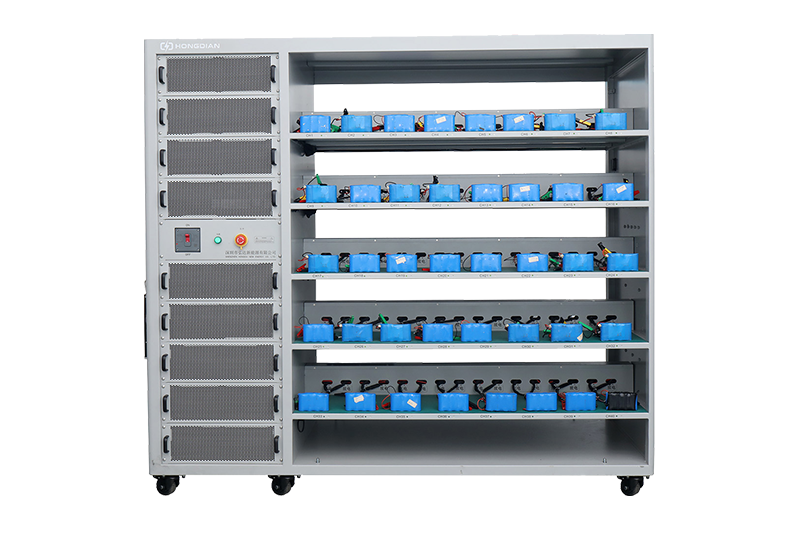
32/48 channel battery charging and discharging test integrated battery cabinet
40 channel battery charging and discharging test integrated battery cabinet
64 channel battery charging and discharging test integrated battery cabinet
80 channel battery charging and discharging test integrated battery cabinet

In today’s fast-changing digital world, making sure your website runs smoothly really is a game-changer for businesses wanting to boost user experience and keep people engaged. One of the key tools for that is the Load Tester — basically a way to mimic real user traffic and see how your site handles the pressure.
Industry reports suggest that if your site’s slow or crashes, you could lose up to 7% of your visitors for every second of delay. That’s why performance testing is such a big deal.
Take Shenzhen Hongda New Energy Co., Ltd., for example — they’ve been dedicated to quality since day one and know just how much website speed and reliability can impact growth. With over a thousand customers and a pretty wide sales network across different countries, using Load Testers more effectively could help them even further up their online game, making sure folks who visit get a smooth, hassle-free experience when checking out their services.
Load testing really plays a huge part in making sure a website gives users a smooth experience. Basically, it’s about making sure your site can handle all the traffic you're expecting — without slowing down or crashing. When a lot of folks come knocking at the door all at once, it’s super important that the site responds quickly and reliably. So, what do we do? We run these simulated user loads to see how the website holds up under pressure. That way, developers can spot any weak spots or slowdowns before real users ever notice them.
Plus, good load testing helps keep response times nice and snappy. Honestly, people expect pages to load fast these days — even a slight delay can be enough to annoy them and make them bounce away. By catching and fixing performance hiccups early, businesses not only keep things running smoothly but also boost customer satisfaction and loyalty. At the end of the day, a well-tuned site, thanks to strategic load testing, really makes a difference in giving visitors a positive experience.
So yeah, it’s definitely a key part of keeping your website in top shape.
When you're doing load testing, it’s super important to keep an eye on some key metrics that really tell you how your website is performing when things get busy. The main ones you wanna watch are response time, throughput, and error rates.
Response time is basically how long it takes for the server to reply to a user’s request—super important for figuring out if people are gonna have a smooth experience. Then there’s throughput, which shows how much data your server is handling in a given period. That gives you an idea of whether your server can keep up with the traffic. And don’t forget about error rates! Keeping track of errors helps spot issues that might pop up as your site gets busier, making sure everything stays stable even under pressure.
Another thing that really matters is resource utilization, like how much CPU and memory your system is using. These numbers give you a peek into how well your infrastructure is supporting your app during those peak times. By paying attention to all these metrics, you can make smarter decisions about where to optimize. The goal is to have a website that’s not only ready for today’s traffic but also prepared for future growth. Taking this well-rounded approach to load testing is key to keeping your online presence fast, reliable, and ready for whatever comes next.
Load testing tools are pretty crucial when it comes to figuring out how your website handles different amounts of user traffic. There are quite a few options out there, each built for different testing needs. For example, open-source tools like JMeter and Gatling are really popular because they let you customize and simulate multiple users easily, plus give you solid performance data. They also play nicely with things like continuous integration setups, so testing can become part of your usual development process without much hassle.
On the flip side, you've got commercial tools like LoadRunner and NeoLoad. These tend to be super user-friendly and packed with advanced features, especially when it comes to analysis. They include built-in reports that really help you spot where your site might be slowing down under load. Plus, with options like cloud testing, it’s easy to scale things up quickly if you’re expecting a traffic spike. Picking the right load testing tool really helps teams catch issues early and makes sure their website performs just as well during those busy times as it does in normal traffic.
Basically, whether you go open-source or go for a pro solution, the goal is the same — keep your site running smoothly no matter what, and these tools just make that easier.
Load testing is super important if you want to make sure your website doesn’t break under heavy traffic. I read somewhere that, according to the Aberdeen Group, about 40% of users will just leave a site if it takes more than three seconds to load. Crazy, right? That just goes to show how much performance really matters when it comes to keeping people around. So, doing proper load tests is a must — it helps spot those pesky bottlenecks before they cause real issues, making sure everything runs smoothly for visitors.
One thing that works well is simulating what real users do. Basically, don't just test when traffic is at its peak; also check how your site handles different situations — like users from different parts of the world or those on slow internet connections. Tools like Apache JMeter or LoadRunner are great for setting up those kinds of tests. And if you keep testing regularly, you'll catch problems early and can fix them fast — kinda like keeping the engine tuned up.
**Some tips to keep in mind:**
1. Before diving into testing, set clear goals — like how quick responses should be and how much traffic your site can handle. That way, you’ll know if you’re hitting your targets.
2. Bring your team or stakeholders into the loop early — it helps everyone stay on the same page and know what to prioritize.
3. When you look at the results, don’t just focus on failures. Also celebrate what worked well, so you can double down on what’s already helping improve your site.
Load testing is pretty much essential if you want to make sure your website can handle the traffic you’re expecting—without crashing or slowing down. That said, a lot of organizations drop the ball on their load testing strategies. One common mistake? Not really mimicking how real users behave. As per a report from the Performance Engineering folks, websites that skip simulating actual user journeys often end up overestimating how well they perform. Then, when the traffic hits peak levels, surprises happen—like unexpected failures.
Another big mistake I see all the time is testing in an environment that doesn’t quite match what’s live in production. If your test setup isn’t truly representative of the real deal, the results can be totally misleading. Actually, a study from TechBeacon showed that 79% of organizations that ran into performance issues after launching had previously tested in environments that weren’t exactly like production.
**A couple of tips:** Make sure your load tests include different user scenarios and behaviors—that way, you get a more complete picture of how your site performs. And, try to have your test environment reflect your live setup as closely as possible to get reliable data. It’s also a good idea to work closely with the dev team to keep load testing as part of your regular deployment process—this will really help make your website more resilient over time.
| Mistake | Description | Impact | Avoidance Strategy |
|---|---|---|---|
| Not Defining Performance Goals | Failing to set clear objectives for load testing. | Unclear outcomes; ineffective testing. | Establish specific performance benchmarks. |
| Ignoring User Behavior | Not simulating real user interactions during tests. | Misleading results that do not reflect usage patterns. | Incorporate realistic load scenarios. |
| Underestimating Load Levels | Setting load expects below typical user traffic. | Performance issues during peak times. | Analyze historical user data to set realistic limits. |
| Neglecting Infrastructure Limitations | Failing to consider server and network constraints. | Server crashes; degraded performance. | Evaluate server capacity and optimize configurations. |
| Not Analyzing Test Results | Overlooking the importance of post-test analysis. | Missed opportunities for improvement. | Regularly review and evaluate test outcomes. |
: Load testing ensures that a website can handle expected traffic levels without compromising performance, enhancing the overall user experience by providing fast and reliable service.
Response time measures the duration it takes for the server to respond to a user's request, making it essential for understanding and optimizing user experience.
Slow response times can lead to user frustration and increased bounce rates, which negatively affects customer loyalty and engagement.
Key metrics include response time, throughput, error rates, CPU usage, and memory usage, which together provide insights into a website's performance under different load conditions.
A common mistake is failing to simulate real-world user behavior, which can lead to an overestimation of performance capabilities and unexpected failures during peak traffic.
Conducting load tests in an environment that does not accurately reflect the production environment can result in misleading results, as it may not reveal performance issues that occur in real-world scenarios.
Organizations should include various user scenarios and behavioral patterns in their load tests, and ensure that the testing environment mirrors the production setup for reliable data.
Organizations should closely collaborate with development teams to integrate load testing into the deployment processes and continuously monitor performance to enhance website resilience.
By identifying and addressing potential performance bottlenecks through strategic load testing, businesses can maintain optimal response times and improve overall user satisfaction.
Companies should analyze key performance indicators to make informed decisions about optimization strategies, ensuring their websites can handle current demands while preparing for future growth.
The article titled "Understanding the Importance of Load Testing for Optimizing Website Performance" really drives home how crucial load testing is when it comes to making sure your website runs smoothly, especially during traffic spikes. It walks you through the key metrics you should keep an eye on—things like response times and throughput—to get a real sense of how your site performs under pressure. Plus, it covers different types of load testing tools, their features, and shares some solid tips for running effective tests. Of course, it also points out common pitfalls to avoid, helping organizations get the most out of their websites.
For a company like Shenzhen Hongda New Energy Co., Ltd., which has expanded successfully into various regions, running load tests isn’t just a good idea—it’s pretty much essential for keeping their site running flawlessly while serving a pretty diverse group of customers. By understanding and applying smart load testing strategies, they can boost user satisfaction and make sure their online experience stays seamless, no matter how much traffic they’re handling.